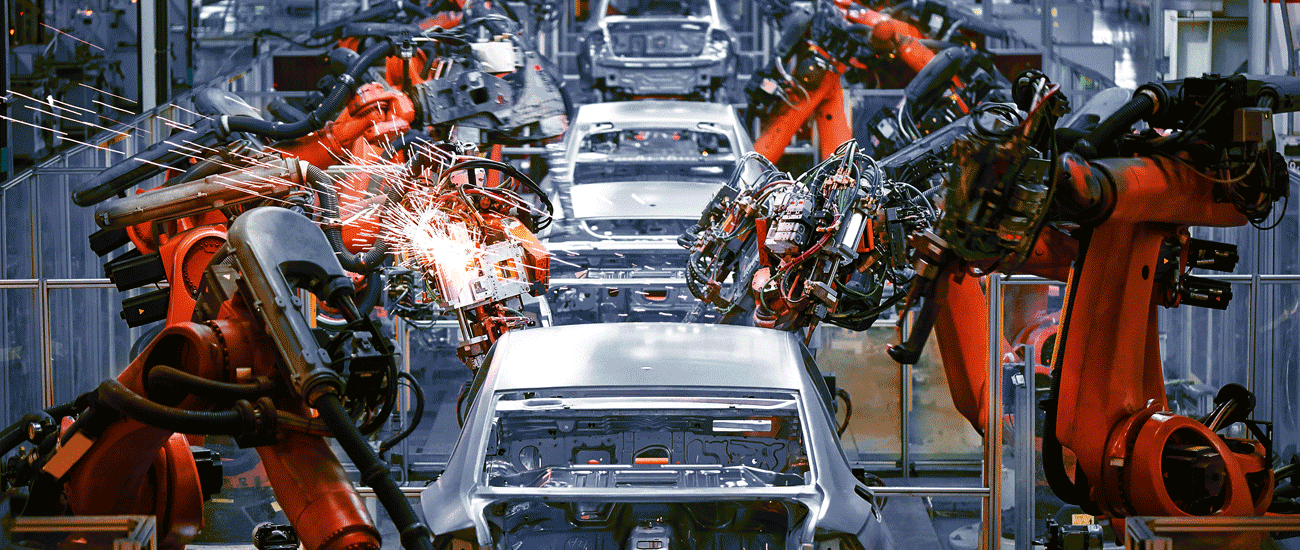
Automotive Industry Certification and Assurance Services

Supporting automotive manufacturers, component suppliers, and service providers with independent certification, verification, and assurance solutions to strengthen quality management, improve operational performance, enhance environmental responsibility, and build confidence throughout the automotive supply chain.

Industry Overview

Driving Quality, Innovation, and Sustainability in Automotive Manufacturing

The automotive industry is undergoing a significant transformation driven by technological innovation, electrification, environmental expectations, and increasingly complex global supply chains.
From vehicle manufacturing and automotive component production to advanced electronics, battery technologies, and aftermarket services, organizations must maintain high standards of quality, operational efficiency, safety, and environmental performance.
Internationally recognized management systems and independent assurance services help automotive organizations establish structured processes, manage operational risks, strengthen supplier relationships, and demonstrate conformity with applicable requirements.

INDUSTRY CHALLENGES

Addressing the Challenges Facing Modern Automotive Manufacturing

Automotive organizations operate in a rapidly evolving environment where product quality, technological advancement, supply chain resilience, and environmental performance are critical to competitiveness and long-term success.

OUR SOLUTIONS

Certification & Assurance Solutions for the Automotive Industry

WECERT provides independent management system certification and environmental verification services relevant to automotive manufacturers, component suppliers, and organizations operating throughout the automotive value chain.

  • Cosmetics — Good Manufacturing Practices (GMP) — Guidelines on Good Manufacturing Practices

    Demonstrate consistent cosmetic manufacturing practices by implementing internationally recognized Good Manufacturing Practice requirements that support product quality, safety and regulatory compliance.

  • Quality management — Customer satisfaction

    Strengthen customer confidence through internationally recognized guidance for complaint handling, customer satisfaction monitoring and quality-focused customer experience management.

  • Road traffic safety (RTS) management systems

    ISO 39001 Impartiality Road accidents belong to the most common causes of injury and death. A road traffic safety management system [...]

  • Automotive Quality Management Systems

    Working in the automotive sector requires a commitment to quality. The caliber of the parts used to make automobiles, as well as of the vehicles themselves, are crucial to ensuring customer safety and an enjoyable customer experience. Employing a quality management system can help ensure consistent performance of automotive products. A technical specification called IATF 16949 can assist in creating such a system.

  • Railway applications — Quality management system

    Railway applications — Quality management system — Business management system requirements for rail organizations: ISO 9001:2015 and particular requirements for application [...]

  • Medical devices — Quality management systems

    ISO 22301 Impartiality Demonstrate your ability to consistently meet customer and applicable regulatory requirements. ISO 13485:2016 is a standard that [...]

  • Petroleum, petrochemical and natural gas industries — Sector-specific quality management systems

    Your Content Goes Here Petroleum, petrochemical and natural gas industries — Sector-specific quality management systems — Requirements for product and [...]

  • Quality Management System

    Establish a systematic approach to improving quality, increasing customer satisfaction, optimizing business processes and driving continual improvement throughout the organization.

OUR Approach

Industry Expertise. Independent Assurance.
Lasting Confidence.

WECERT supports organizations across the automotive value chain through independent certification and assurance activities designed to evaluate conformity, strengthen management systems, and build confidence in organizational and environmental performance.

FREQUENTLY ASKED QUESTIONS

Automotive Certification & Carbon Verification: Frequently Asked Questions

Find answers to common questions about certification. verification, and assurance services for the Automative sector

Our team is here to help you identify the right certification / verification and assurance for your organization

Automotive manufacturers may benefit from ISO 9001 for quality management, ISO 14001 for environmental management, ISO 45001 for occupational health and safety, ISO 50001 for energy management, and ISO/IEC 27001 for information security.

The appropriate standards depend on the organization’s activities, operational risks, and customer requirements.

ISO 9001 establishes general quality management system requirements applicable across industries.

IATF 16949 incorporates automotive-specific requirements in conjunction with ISO 9001, addressing areas such as defect prevention, process control, supplier management, and continual improvement.

ISO 14064-1 provides requirements for quantifying and reporting organizational greenhouse gas emissions and removals.

Automotive manufacturers can use this framework to develop greenhouse gas inventories covering relevant manufacturing, energy consumption, transportation, and supply chain activities.

Independent verification can strengthen confidence in reported greenhouse gas information.

ISO 14067 establishes requirements and guidelines for quantifying and reporting product carbon footprints based on life cycle assessment principles.

In the automotive industry, it can be applied to products such as vehicle components, batteries, electronic systems, and other manufactured products.

Independent verification can help establish confidence in reported product carbon footprint information.

Carbon footprint verification can help electric vehicle and battery manufacturers demonstrate the credibility of reported greenhouse gas information.

Product-level assessments can consider relevant life cycle stages, including raw material extraction, component production, manufacturing, distribution, use, and end-of-life treatment, according to the defined assessment boundaries.

Verification may support supply chain transparency, customer requirements, and environmental reporting.

ISO 14064-1 addresses greenhouse gas emissions and removals at the organizational level.

ISO 14067 focuses on the carbon footprint of individual products using life cycle assessment principles.

Automotive organizations may use both standards to understand and report emissions associated with their operations and products.

Automotive organizations can submit a request for proposal to WECERT, providing information about their activities, operational locations, workforce, and requested certification or verification services.

For carbon footprint verification, relevant information may include the reporting boundaries, reporting period, applicable criteria, and greenhouse gas statement or product carbon footprint information.

WECERT can review the request to determine applicable requirements and service availability.

Take Next Step

Strengthen Confidence in Your Automotive Operations

Explore certification and assurance solutions relevant to your automotive manufacturing and supply chain activities. Our team can help you identify applicable standards and understand the certification or verification process.